World Cup Affiliate Review: Traffic, Capacity and Work After Finals
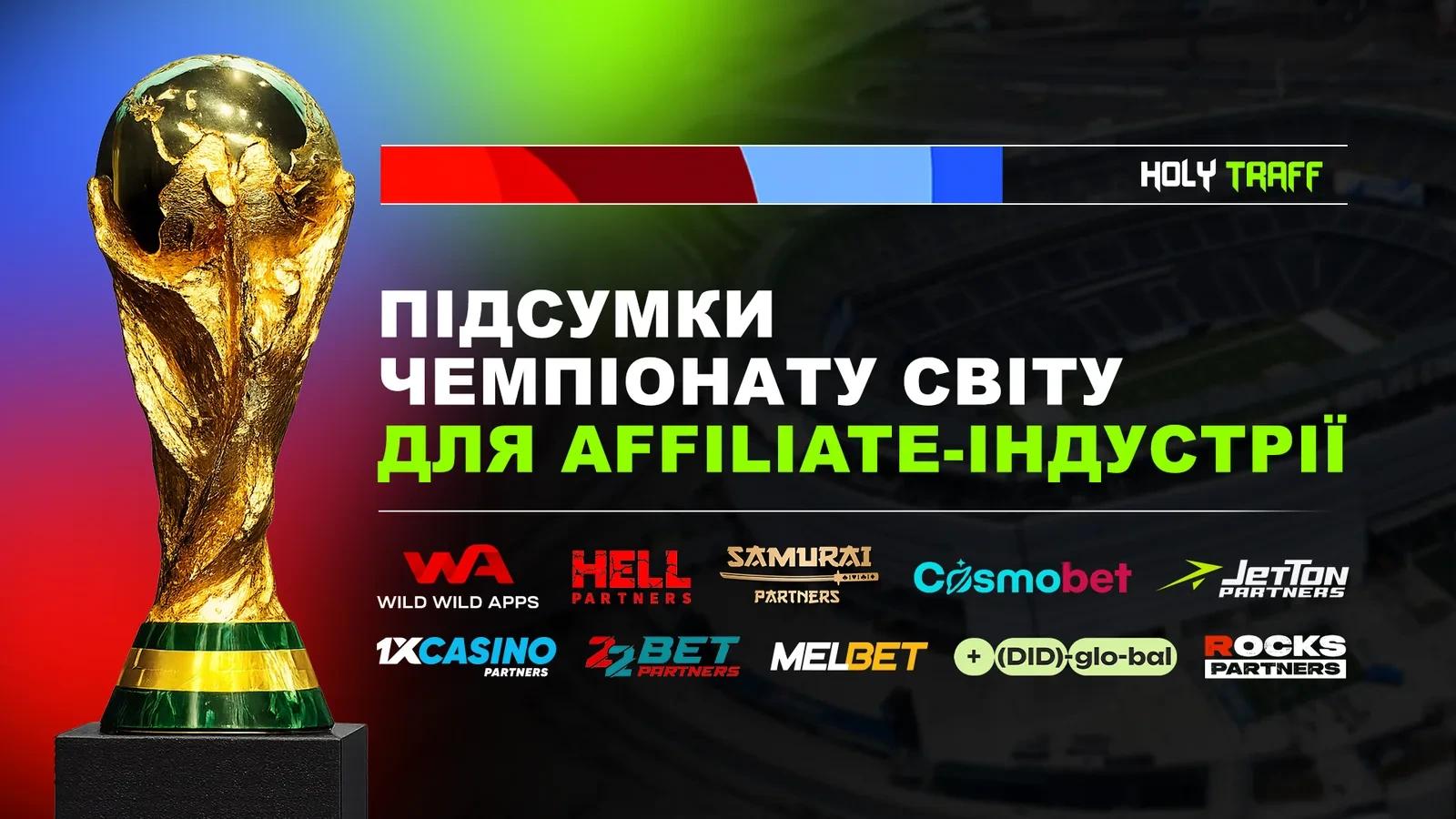
The final whistle closes a tournament, but it does not close the accounts for its acquired audience. In HolyTraff’s publication dated 27 July 2026, ten companies discussed sports traffic, product launches, infrastructure checks and additional casino activity around the World Cup. We compare their observations while separating internal estimates from market-wide conclusions. There is no common sample or measurement method here, so the most useful thing to take from the review is a set of questions for your own campaign: what worked, what handled demand and what remained after the first deposits?
Which sources partners identified
22Bet Partners highlighted SEO and Telegram, particularly placements in tipster channels. In their experience, search supplied a more even flow while Telegram supported reactions to matches. That describes a particular programme, rather than guaranteeing the quality of every themed channel.
HELL PARTNERS described SEO, PPC, ASO and tipsters as part of a sequence: recognition and interest first, registrations and deposits afterwards. Their estimate of sports traffic rising 30-50% on important match days is their own. The original provides no sample or baseline that would make it a market-wide measure.
1xCasino Partners associated Facebook Ads and Telegram Ads with volume, SEO with longer-term traffic and ASO with mobile demand. JetTon Partners favoured Facebook plus ASO while testing creatives and markets in parallel. Samurai Partners mentioned review-site SEO and cross-brand activity; Cosmobet highlighted SEO and Facebook.
WILD WILD APPS reported football-app traffic shares of 59% for Facebook, 20% for Unity and 15% for UAC. Those figures total 94%, leaving a remainder unexplained in the original. They are internal figures, not platform market shares across sports affiliate marketing.
Rocks Partners described a more mixed experience: fast PPC became more expensive towards the knockouts, Facebook supplied volume with quality concerns, and email and SMS helped retention. These observations do not invalidate other participants’ positive accounts. Different products and audiences can produce different outcomes during the same event.
Why the tournament’s role depended on the product
For 22Bet Partners, the World Cup was a significant sports window, while HELL PARTNERS used it to develop sportsbook and reactivate casino audiences. Rocks Partners also treated it as a process test. Comparing those objectives is more useful than assigning one objective to every company.
JetTon Partners linked the tournament to its betting-offer launch. The article listed historical promotions: freebets up to $1,600, bet insurance, a $30,000 prediction contest, an apartment raffle and $25,000. These are announced seasonal terms, without verified giveaway outcomes or a promise of present availability.
WILD WILD APPS worked with Evoplay on themed applications and prepared materials. MelBet Partners described MELBET Affiliate Cup Uzbekistan through a Telegram bot, with a Ducati, Rolex, Maldives trip and signed Khusanov shirt. The effectiveness of the prizes remains the company’s assessment rather than an independently measured effect.
Uzbekistan’s football context has separate confirmation: FIFA reported its first World Cup qualification in June 2025. The source was checked on 15 October 2026. That fact does not verify the conversion rate of a particular commercial campaign.
For more on Uzbekistan as a GEO, see our separate overview.
1xCasino Partners and Samurai Partners did not make the competition central because the products described had no sportsbook. Cosmobet treated it as one opportunity within a broader sports calendar. DID Global focused on infrastructure rather than competing over acquired volume.
Observations about behaviour and capacity
HELL PARTNERS and MelBet Partners described faster decisions, short content and sensitivity to news. WILD WILD APPS emphasised updates tied to particular matches. These observations suggest hypotheses, but without comparable data they do not establish one uniform change across all users.
22Bet Partners instead saw slightly lower activity than at several other major events, partly attributing it to inconvenient match times. Rocks Partners described more distributed demand. JetTon Partners distinguished the high-volume group phase with smaller average bets from more targeted, larger knockout-stage bets.
DID Global reported approximately 20-30% more verification and call-centre load, preparation for 30-40% peaks and a 10-15% increase in mobile share. These are different measures: observed workload, planned capacity and device share. Adding the percentages together or substituting one for another would be misleading.
DID Global also estimated that the market might have missed 15-20% of potential traffic between headline games. The method for calculating that potential volume was not supplied. Your own review can compare available periods and interruption reasons without recording an unverified estimate of loss as established fact.
The practical question covers the whole funnel: where did people drop out? Impressions, registration, contact verification and payment require different evidence. Discussing interface speed becomes more useful when the team can identify the step where a problem actually occurred.
Mistakes the teams would avoid repeating
Late preparation was mentioned by 22Bet Partners, HELL PARTNERS, WILD WILD APPS, MelBet Partners and Samurai Partners. The complaint was concrete: testing content, markets, products and infrastructure consumed the peak period. It is a repeated interview theme, although each partner’s losses were not quantified.
JetTon Partners criticised identical creatives from spy tools and preferred adapted versions. Rocks Partners highlighted the first week, while HELL PARTNERS highlighted missed reactivation opportunities. Not every potential improvement involved opening another acquisition campaign.
1xCasino Partners recommended remembering audiences for other sports. Cosmobet encouraged openness to new brands and approaches. In practice, that can become a bounded set of hypotheses rather than a justification for random product changes whenever performance fluctuates.
Rocks Partners also compared CPA and hybrid remuneration, stressing longer-term income. That view does not make hybrid automatically superior for everyone: terms, payout timing and cohort quality matter. Agree the model before a campaign and compare outcomes over the same horizon.
Checks before the next sporting window
Rocks Partners recommended a budget reserve of around 20-30%, while DID Global suggested at least 30% extra capacity. These are two participants’ recommendations about different resources, not mandatory industry standards. Your values should reflect supported demand, available staff and the cost of interruption.
Preparation should begin with product and terms: permitted market, source, payable event and reconciliation. Then test the user journey and support readiness. For creative materials, agree who updates match context and what happens when the main asset is unavailable.
Schedule a post-event review separately. Preserve sources, change dates, confirmed costs and cohort income status instead of only a headline-volume screenshot. Distinguish acquisition, reactivation and movement between products, since the same first-deposit label does not necessarily represent the same acquisition task.
Retention needs a plan consistent with permitted communication, too. Sending a message does not by itself establish repeat activity. Examine what happened afterwards and the cost of continuation, maintaining a clear distinction between the team’s action and the user’s response.
Questions about the World Cup review
Which source won?
The article establishes no overall winner. Companies described different products, markets and measurements, so their accounts are not one controlled comparison.
Can WILD WILD APPS’ percentages represent the market?
No, they describe an internal football-app traffic slice. Even the remaining 6% is unspecified, and no market-wide sample is described.
Is a 20-30% budget reserve compulsory?
That is Rocks Partners’ recommendation. Select your own reserve against the campaign’s risks and plan, separately from infrastructure capacity.
Should a review wait until every payout clears?
An early review is useful when it labels incomplete data. Final economics should not be declared confirmed while relevant income or costs remain unsettled.
What remains useful after the final
Ten companies describe different tasks around one competition: acquisition, products, local relationships, capacity and retention. The value lies in comparing experience without turning internal estimates into market statistics. Before the next event, choose your own objective, test the funnel and agree what evidence the review will need. Afterwards, preserve the campaign context and its audience follow-up, so decisions for the next season rest on observations the team can actually explain.
For World Cup 2026 as a major marketing event for brands and partners, see our separate article.