April Betting Calendar: How to Check a Sports Campaign Plan
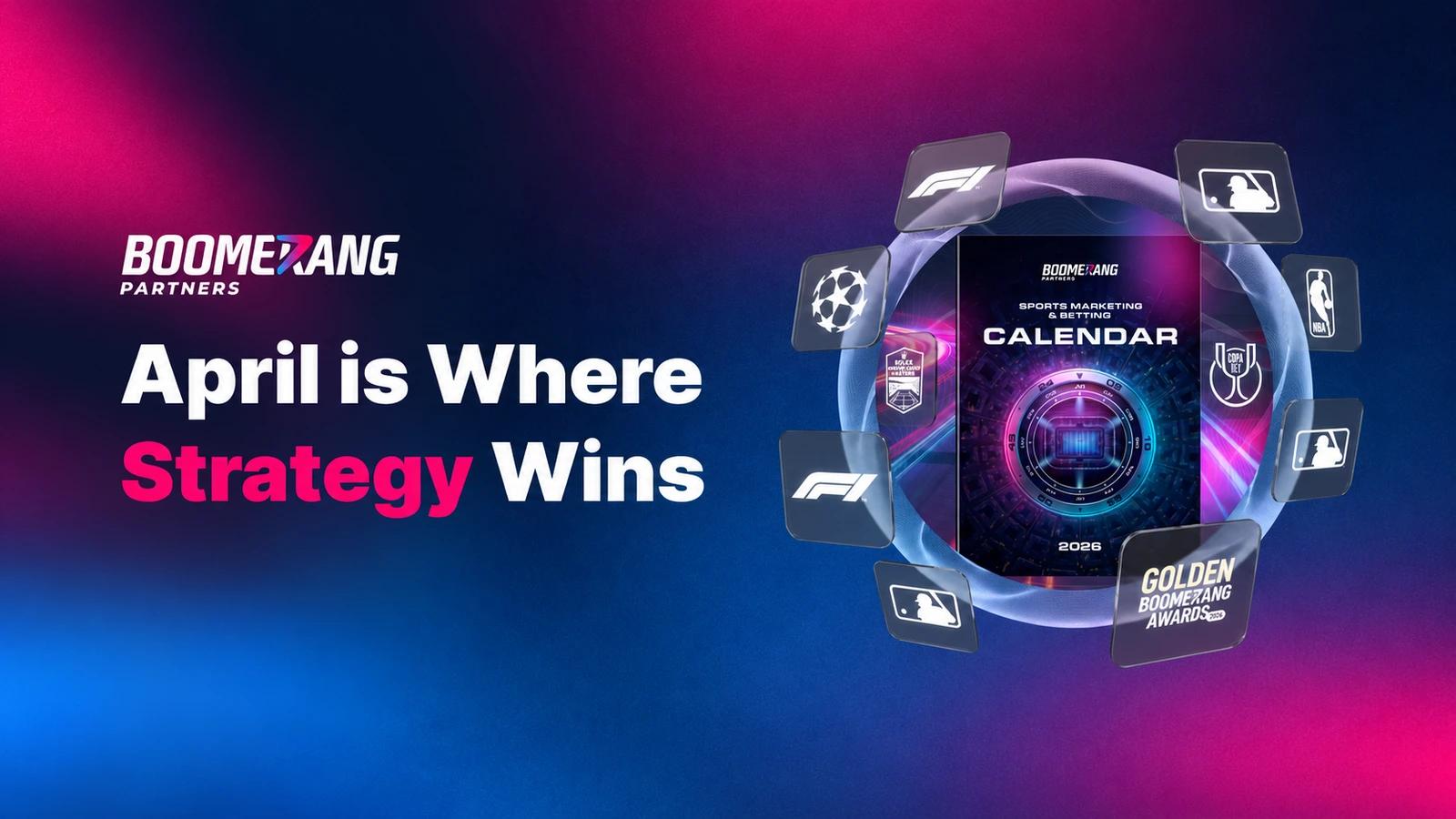
April 2026 is useful as a retrospective of sports campaign planning because several competitions overlapped while two Formula 1 race weekends dropped out of the month. The original Boomerang Partners contribution treated that fragmentation as an opportunity. We revisit the calendar as an example of how to check dates, separate a demand hypothesis from evidence, and plan before, during, and after an event. These dates are historical, and the old tournament invitation is not a current registration announcement or a ready schedule for a new launch.
Reconstruct the calendar before interpreting demand
UEFA’s official quarter-final announcement confirms Champions League matches on 7-8 and 14-15 April 2026. Those are distinct match windows, not one continuous acquisition peak. A team still needs the actual fixture, audience, local time, and product availability before turning a tournament date into a campaign brief.
The original contribution also highlighted the 18 April Copa del Rey final, April NBA and NHL playoff activity, daily MLB scheduling, Monte-Carlo tennis, Madrid tennis, and the London world team table tennis event starting on 28 April. The source picked these events for its planning narrative; they are not a measured ranking of affiliate opportunities.
Its tennis ranges require care: the article used 4-12 April for Monte-Carlo and Madrid from 20 April. ATP’s official 2026 listing instead identifies the main tour windows as 5-12 April and 22 April to 3 May. Qualifying, site activity, and main draw dates may differ, so name the exact event layer before using a range operationally.
Formula 1 confirmed that Bahrain and Saudi Arabia would not take place in April. That supports removing their original April weekends from an event plan. It does not prove that their audience or advertising competition automatically moved to football, tennis, or any other sport.
Store the source URL, date checked, time zone, and scope beside each event. Record whether the entry describes qualifying, the main draw, a match day, or a whole tournament. This keeps a creative team and a buyer from using the same calendar label for different moments.
Treat the three event phases as a hypothesis
Boomerang’s original contribution described registrations and deposits increasing most noticeably in the final seven to ten days before an event. It attributed this pattern to internal data and the Sports Marketing & Betting Calendar 2026. No cohort export, sample, market breakdown, or comparison period was supplied, so the interval remains a source claim rather than a universal buying rule.
The pre-event phase is useful for testing relevance and preparing the journey. A team can verify the message, availability, landing content, measurement, and support capacity before attention rises. That preparation does not require assuming that every audience will respond on the same day before kick-off.
During an event, timely content can depend on changes in the sporting situation. The source associated live activity with moments such as goals and red cards. Treat that as the source’s observation: event-driven posting is not proof of a particular betting response or guaranteed conversion improvement.
After the event, examine what actually happened to the acquired cohort. Some people may remain active, some may leave, and some may follow another competition. Do not label all later tennis activity as football audience migration without a defensible way to connect the observations.
The three phases help organize questions. They do not determine the same strategy for a football final, a multi-day tennis draw, and a long playoff series. Adapt the observation period and content rhythm to the sport rather than forcing every event into one identical launch template.
Build a test that distinguishes timing from traffic mix
Choose the business outcome before scheduling creative. A useful result might be qualified registrations or approved first deposits, depending on the agreement. Record the source, offer, GEO, audience, and approval definition so that an increase in activity has a clear commercial meaning.
For a comparison, take equally defined cohorts acquired before, during, and after one event. Keep their observation age comparable and distinguish provisional from approved outcomes. Comparing a mature pre-event cohort with a fresh live cohort would confuse conversion delay with campaign timing.
Separate the effect of changing creative from changing media prices. If a team alters the bid, product, country, and landing while the tournament starts, the overall movement will have several possible causes. Record those changes rather than attributing every improvement to the calendar.
| Planning item | Question to answer |
|---|---|
| Event | Which exact match window or tournament stage? |
| Audience | Who follows it in the selected channel and market? |
| Message | Does the creative accurately describe the product? |
| Measurement | Which qualified outcome and observation period? |
| Operations | Who handles schedule changes and broken journeys? |
| Review | What evidence would support a different next action? |
Have an alternative plan for cancellation or postponement. Pause time-specific copy, remove unavailable references, and decide whether another event is genuinely relevant to the same audience. Replacing a cancelled race with an unrelated sporting image can preserve a schedule while breaking the campaign’s meaning.
Keep the archive separate from the next live calendar. A historical example should explain the process and its evidence, while an operational plan needs fresh confirmation. This matters especially when a reused article still says “will happen” beside a date that has already passed.
A simple editorial check also helps. One person verifies dates and local time, another checks that the copy matches the actual stage of the event. If the tournament has already ended, the verbs and the call to action change; if it has been postponed, the correction has to reach every related announcement rather than stay as a single note in the calendar.
Put the Golden Boomerang invitation in its period
The source linked April planning with the third Golden Boomerang Awards and said the launch would be 2 April. Boomerang’s official announcement instead states 3 April 2026. We use that published date and treat the original invitation as historical, rather than inviting a reader to enter through an obsolete starting window.
The contribution also described converting TIME TO WIN performance into GBA’26 bonus points. Check that claim against the partner’s rules for the relevant period: this update does not confirm that the transfer applies today without conditions. The sports calendar and the affiliate competition are related promotional topics, not the same measurement system.
Our recommendation is to evaluate normal campaign economics before competition points. A ranking benefit is conditional and should not replace approved revenue in a forecast. If a team changes acquisition decisions for a promotion, record the additional cost and the actual eligibility terms separately.
Competition claims also need version control. Save the relevant rules and manager clarification with the campaign record, especially if timing or qualification changes. A remembered promotional sentence is weaker evidence than a dated condition that both parties can identify later.
Before a new cycle, also review the team’s resources. Who checks for postponements at the weekend, who updates the landing, and who confirms the offer is actually available? If responsibility is not assigned, even a correct date quickly goes stale. Keep a simple procedure for changing the plan so that the information reaches everyone involved and finished creative does not stay live after an event is cancelled.
Once it is over, compare expectations with the facts. Record where the calendar genuinely helped with preparation and where interest did not turn into an agreed result. That way the next decision rests on the specific team’s experience rather than on repeating an attractive assumption from a partner announcement.
Questions about using an old sports calendar
Can April 2026 dates guide a current launch?
They can illustrate planning principles, but a current campaign requires a freshly checked schedule. Treat the archive as a worked example rather than a live fixture service.
Is seven to ten days the best universal launch window?
The original source did not supply evidence for that conclusion. Use it as a hypothesis to compare against your own audience and approved outcomes.
Do cancelled races guarantee cheaper attention elsewhere?
No. The schedule change is confirmed, but its commercial consequences require auction and audience evidence. Do not infer the size or direction of the effect from the calendar alone.
Does an awards invitation justify scaling?
Only the actual campaign economics and applicable conditions can support that decision. Keep potential points and prizes separate from ordinary approved earnings.
Let timing support a documented decision
April’s overlapping events show why a sports plan needs more than a list of dates. Verify the event layer, prepare the product journey, compare equally mature cohorts, and keep schedule changes visible. Boomerang’s original phase model provides useful questions, while its demand patterns remain attributed observations. Use the archive to improve the method, then build the next campaign from current evidence and a clear commercial objective rather than an old promotional countdown.