Moon Partners on Seasonal Traffic and Oktoberfest Campaigns
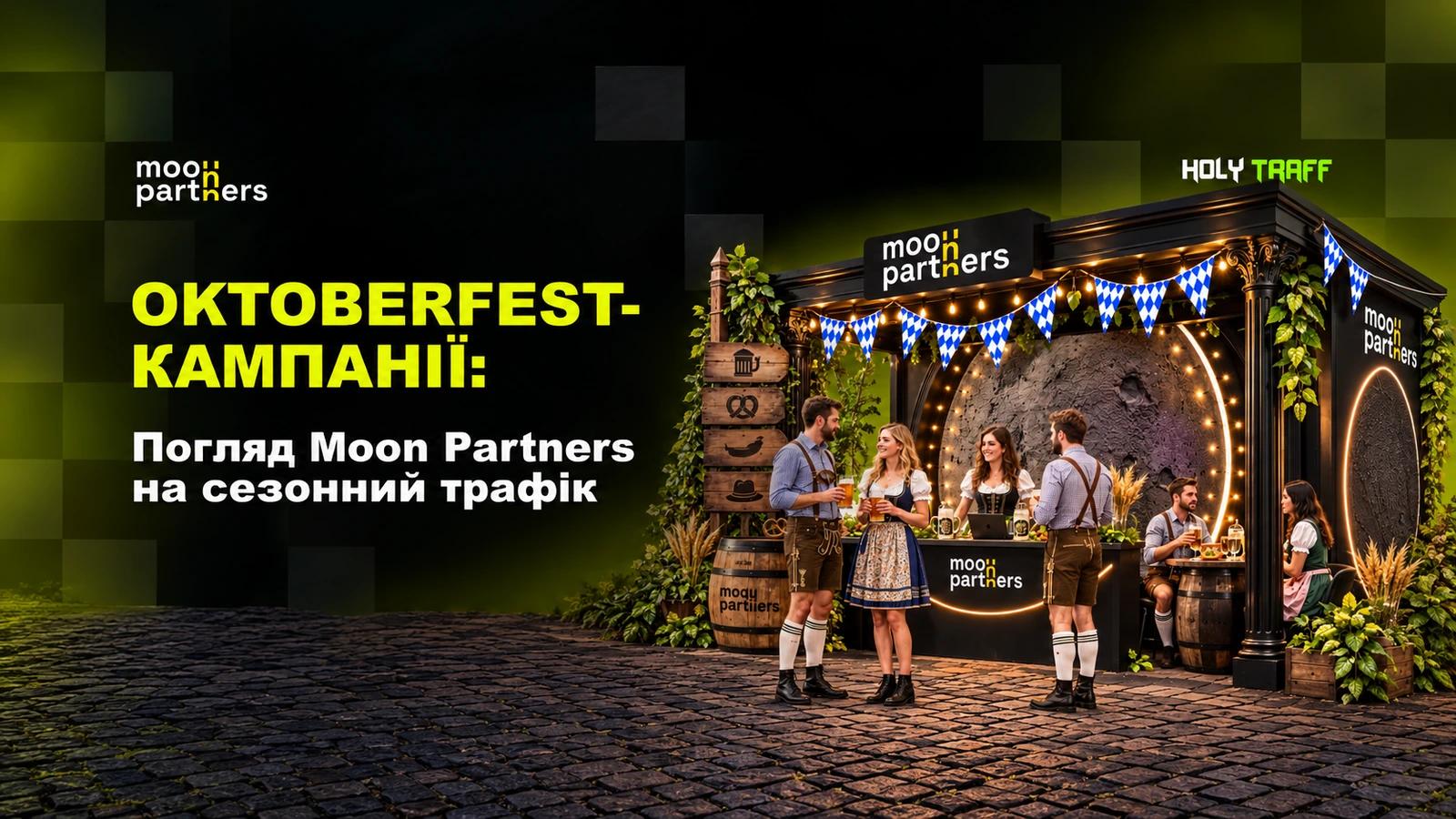
Seasonal campaigns have always presented a unique challenge for marketing teams: a narrow window of opportunity, intense competition for user attention, and creatives that become outdated in a matter of days. Oktoberfest is no exception. In fact, it is a clear example of how quickly the rules of the game can change, even for an event that takes place every year. In the interview, Moon Partners explains why early coordination, the link between the offer and the creative, and checking the whole funnel matter, and we add separate questions for your own test.
Moon Partners decided to share what preparing for such campaigns looks like today from an affiliate program’s perspective: where the work with teams begins, which mechanics actually deliver results, where conversions are most often lost, and how creative approaches have changed over the past few years.
The following answers belong to Moon Partners. Meeting announcements refer to autumn 2026, and dates and stands are given as in the original interview.
How does your brand prepare for Oktoberfest campaigns today? Where does the process begin, and what has the biggest impact on the final approach?
Our preparation is primarily media-focused: we create themed content for social media and participate in seasonal collaborations like this one.
For the teams we work with, we provide advice on themed content: what resonates during the season and which approaches are worth trying.
The biggest factor influencing the final approach is how early we manage to coordinate with our partners. The seasonal window is narrow, and the earlier you start preparing content, the more approaches you have time to test.
What actually works in Oktoberfest traffic today? Which offers, mechanics, or creative approaches deliver the best results?
We see this from the affiliate program’s perspective, observing what works for our partners across different GEOs.
Seasonal mechanics perform best when they are integrated into the product itself rather than simply added to the creative. In other words, the theme should be supported by promotions and gamification, not just an image in an ad.
The second important factor is response speed. The season is short, and teams that manage to test several approaches in the first few days have enough time to scale the best-performing one.
We do not publicly disclose specific performance figures, but according to our observations, seasonal campaigns generate noticeably higher engagement than standard campaigns at a comparable acquisition cost.
Which mistake in Oktoberfest campaigns most often costs a brand results, even when the creative itself looks strong?
The most common mistake is a creative that has nothing behind it.
When users see a bright seasonal ad, click through, and land on an ordinary page with no reference to the theme, the disconnect between the creative’s promise and what comes next kills conversion, even with an excellent CTR.
The second typical mistake is starting too late. Teams begin preparing their campaigns after the season has already started and spend half of the available window on approvals instead of testing.
The third factor that is often overlooked is local market specifics. Oktoberfest is perceived differently across markets, and an approach that works in one GEO may feel out of place in another.
Oktoberfest Then vs. Now: How has your approach to creatives changed over the past few years? What worked before, and what works today?
In the past, seasonality alone was enough. A themed image could already deliver an uplift because there was little similar content, so it stood out.
Today, users see dozens of seasonal ads at the same time. The theme alone no longer works. What performs is content that feels natural and does not look like a template.
The second shift is the move from one large campaign to a series of short tests. Previously, teams prepared one approach and launched it. Now they test several versions in parallel and quickly reallocate budgets.
The third change, which was almost absent before, is consistency between the creative and the product. Today, a seasonal campaign only works when the theme runs through the entire user journey rather than existing separately in the ad.
Where to Meet the Moon Partners Team Next
We regularly attend conferences because we believe no amount of messaging can replace a face-to-face conversation.
This autumn, the Moon Partners team will attend two events, and we would be happy to meet in person, discuss potential cooperation, or simply get to know each other.
- SBS Summit: September 29 to October 1, 2026, Lisbon, Booth 212-213.
- SiGMA Rome: November 2-5, 2026, Rome, Booth H1-1068.
At both events, our team will be ready to discuss terms, the product, and anything else you are interested in, without formalities or unnecessary bureaucracy.
You can schedule a meeting in advance via Telegram: @moon_partners. This way, we can make sure to find time for each other. We look forward to seeing you!
Turn Moon Partners’ answers into a test plan
The following is HolyTraff’s editorial analysis. The affiliate program describes its observations without publishing metrics, so we do not turn references to engagement into a performance promise. Take practical questions from the interview: does the product contain a seasonal mechanic, does the message match it and can the team test changes before the event finishes?
Map one chain: advertisement, landing page, registration and the advertised promotion. At every step, ask what the user expects to find and whether that information is available. If the seasonal theme ends at the banner, more festive graphics will not repair disappointment further along the journey.
Review localization for meaning rather than translation alone. One audience may recognize the festival theme, while another needs an offer that makes sense without that cultural association. This is a test hypothesis rather than a claim that a particular country will necessarily perform better.
Define the difference between creative versions before comparing them. For example, one could lead with mechanics and another with the event atmosphere while keeping offer terms unchanged. With comparable audiences and periods, you can attribute the difference to presentation rather than to random differences between unrelated campaigns.
Assign someone to check that materials remain current. Once the promotion ends, advertisements, links and landing pages should stop promising entry. Add this to the plan before launch: a seasonal message needs a stop date as well as a start date.
Combine partner questions in one message. Confirm permitted markets, current conditions, materials and events used to assess the test. Then record who owns changes and how quickly the team can make decisions after receiving data. This is an internal benchmark, not a guaranteed support response time.
Questions about seasonal traffic
Does stronger engagement mean profitability?
No. They are different metrics. Economic assessment needs a defined action, costs and observed outcomes. Moon Partners does not publish a dataset that would support a general forecast.
Does the entire product need Oktoberfest decoration?
In its answers, Moon Partners emphasizes a consistent user journey. The changes depend on the offer: a visible, understandable promotion is more useful than decoration that explains nothing.
Can a successful approach be moved to another market?
It can be tested as a hypothesis. Confirm product availability, message clarity and applicable conditions in the new market first.
Are the meeting announcements still current?
The interview lists events from autumn 2026. Confirm attendance, dates and meeting availability with the team, especially after an event has passed.
What to take from the interview
Moon Partners recommends viewing the seasonal campaign as a complete journey, from partner preparation to what a person sees after clicking. Turn that perspective into a checkable list for your team rather than a mandatory recipe. Confirm mechanics, localization, events and the date materials should stop. The test can then show how a particular offer works for a particular audience, and festive design becomes part of clear communication rather than mere decoration.